#5
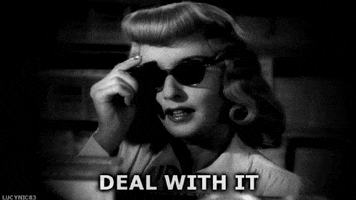
From the start, it is evident that the male lead, Walter Neff, is a weak man in comparison to the charming, young Phyllis Dietrichson. Not in terms of status or wealth, but in his inability to resist temptation from this future love interest. In the 1944 film, Double Indemnity, it is clear that women’s appearance is used to lure in the focus of the man. Dietrichson is constantly being sexually objectified by other lead characters, which is accepted by the audience. There is no doubt that her true motives are shielded by her flowery feminine cover up, as she appears to an outside perspective as the damsel in distress. She directly addresses the situation of being objectified when she notes the lack of respect her own husband has for her. It is not her morals that give her the attention from her male counterparts, but their desire for her based off of the sexual attraction she gives off.
It is evident that the way Phyllis Dietrichson is portrayed in the film is reflective of how the vast majority of women in the 1940’s were treated- not as powerful or dominant, rather, they were seen merely for their outer appearance. This could be noted by the light colors she wears, representing her elegance and femininity or by the sly and flirty tone she uses when speaking to Neff. She also poses in positions showing off her legs rather than staying seated in a productive manner. It is for her looks that the men fall weak, but also the standards for gender that are set by society in this time period. She understands the position she is put in here and acts on it, as she manipulates the men and uses her stature as a woman to her advantage.